
Understanding the Life Cycle Perspective in ISO 14001:2015: Practical Application Across Key Industries
- Pierre Venter
- Nov 17, 2025
- 4 min read
Updated: Feb 10
The ISO 14001:2015 Environmental Management Standard introduced a strengthened requirement for adopting a “life cycle perspective” (LCP). This concept does not require organisations to perform full life cycle assessments, but it does require them to systematically consider the environmental aspects and impacts associated with every stage of a product or service’s life. In practice, this means evaluating upstream inputs, operational processes, downstream outputs, and end-of-life implications to ensure that environmental risks and opportunities are effectively managed.
Organisations are expected to use this perspective when planning and controlling their operations, designing products and services, engaging suppliers and contractors, and making procurement decisions. By integrating the LCP into operational planning, organisations can enhance environmental performance, reduce resource consumption, and strengthen legal compliance and stakeholder confidence.
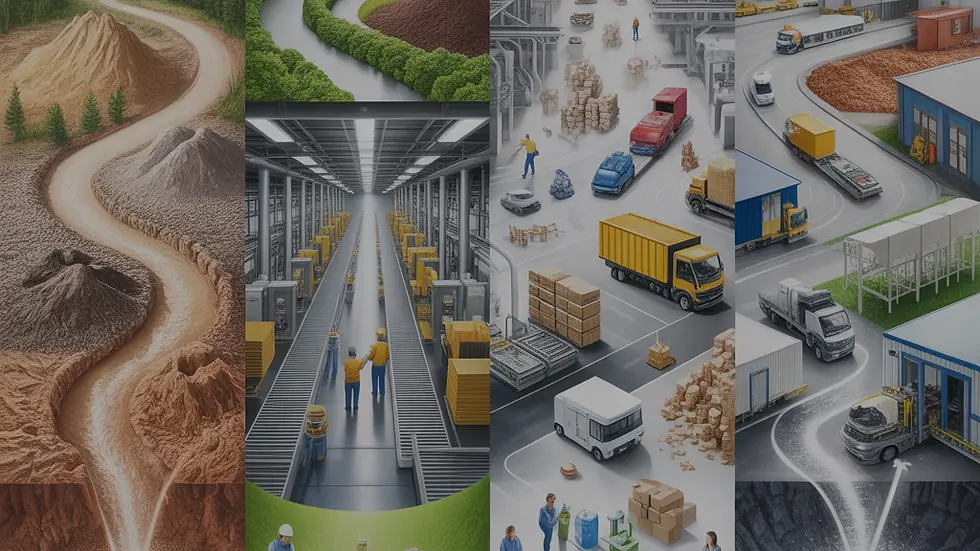
Understanding the Life Cycle Perspective
The life cycle perspective is a comprehensive approach that considers the environmental impact of a product or service from its inception to its disposal. This perspective is crucial for organisations aiming to improve their sustainability practices and comply with ISO standards.
Importance of Life Cycle Perspective
The life cycle perspective allows organisations to:
Identify environmental impacts at each stage of a product's life.
Make informed decisions that enhance sustainability.
Comply with regulatory requirements and standards.
Application Across Industries
Below is an exploration of how the life cycle perspective can be effectively applied within various industries.
1. Manufacturing
Manufacturing environments typically have broad environmental interactions across the full value chain. Applying an LCP allows manufacturers to anticipate and mitigate impacts before production even begins.
Examples of Application:
Raw Material Selection: Evaluating suppliers based on the environmental impacts of extracted materials, recycled content availability, and resource efficiency.
Design for Environment: Engineering products to use fewer hazardous substances, reduce energy consumption, and promote recyclability at end of life.
Packaging Controls: Reducing packaging weight, using biodegradable or recycled materials, and optimising palletisation to minimise transport emissions.
Waste Minimisation Through the Process: Implementing closed-loop manufacturing, reworking defective items, and improving yield ratios.
End-of-Life Considerations: Offering product take-back programmes or designing components that can be easily disassembled for reuse.
2. Construction
Construction activities pose significant environmental risks, from material sourcing to demolition. The LCP allows construction companies to evaluate and control impacts across the project’s entire lifespan.
Examples of Application:
Material Procurement: Selecting low-impact materials such as locally sourced aggregates, low-VOC paints, or sustainably certified timber.
Design and Planning: Incorporating energy-efficient building designs, water-saving systems, and climate-resilient materials.
Construction Phase Controls: Reducing waste generation, segregating waste streams, and optimising equipment use to reduce fuel consumption.
Operational Handover: Ensuring buildings are handed over with clear guidance on efficient operation and maintenance procedures.
Demolition and Deconstruction: Planning for reuse of structural materials, safe disposal of hazardous substances, and recycling of rubble.
3. Engineering
Engineering companies, whether mechanical, civil, or process-focused, play a pivotal role in the design and specification of equipment and systems. Their decisions influence environmental performance throughout the entire life cycle of assets.
Examples of Application:
Design Specification: Engineering components that consume less energy, have longer service lives, and are easier to maintain or upgrade.
Supplier Management: Selecting environmentally responsible vendors for components, consumables, and fabrication services.
Installation and Commissioning: Avoiding excessive waste, ensuring emissions controls are in place, and minimising disturbances to surrounding environments.
Operational Support: Providing clients with guidelines for efficient operation and recommending eco-friendly maintenance practices.
Decommissioning Planning: Advising on safe disposal or recycling of equipment at end-of-life.
4. Consulting and Professional Services
Although consulting organisations have limited direct environmental impacts compared to manufacturing or mining, their influence is often indirect and strategic. Applying the LCP ensures that recommendations and deliverables support responsible environmental outcomes.
Examples of Application:
Project Planning: Advising clients on environmentally sustainable materials, energy-efficient equipment, or renewable energy options.
Policy and Strategy Development: Integrating life cycle thinking into environmental management plans, supplier programmes, and risk assessments.
Indirect Footprint Reduction: Implementing digital workflows, reducing travel emissions, and using energy-efficient office systems.
Client Deliverables: Ensuring reports, designs, and recommendations consider upstream and downstream implications, not only immediate operational issues.
5. Mining
Mining operations affect the environment at every stage: exploration, extraction, beneficiation, waste management, closure, and post-closure rehabilitation. Applying a robust LCP is essential for minimising long-term environmental harm.
Examples of Application:
Exploration and Planning: Environmental baselines and impact assessments that consider long-term land use, water dependency, and biodiversity effects.
Extraction Phase: Using low-impact drilling and blasting techniques, optimising haul routes to reduce fuel use, and ensuring responsible chemicals management.
Processing Activities: Maintaining closed-circuit water systems, energy-efficient crushers and mills, and managing tailings facilities responsibly.
Waste and By-Product Management: Ensuring waste rock, tailings, and hazardous waste are managed with long-term rehabilitation in mind.
Mine Closure and Rehabilitation: Designing closure plans that include land restoration, erosion control, and post-closure monitoring for decades.
6. Transport and Logistics
Transport and logistics operations generate environmental impacts through fuel consumption, route planning, vehicle maintenance, warehousing operations, and supply chain choices.
Examples of Application:
Fleet Procurement: Selecting fuel-efficient vehicles, hybrid/electric alternatives, or equipment with lower emissions ratings.
Route Optimisation: Using telematics and planning tools to reduce kilometres travelled and improve delivery efficiency.
Maintenance Practices: Ensuring vehicles are regularly serviced to maintain optimal fuel consumption and emission control.
Packaging and Handling: Minimising packaging waste and selecting reusable pallets and containers.
End-of-Life Vehicle Management: Ensuring proper recycling of tyres, batteries, and scrap metal through accredited service providers.
Conclusion
The life cycle perspective is not a single activity or a formal assessment; it is a systematic way of thinking. By understanding how each stage of a product or service contributes to environmental performance, organisations can make informed decisions that reduce impacts, support compliance, and enhance sustainability outcomes.
Across manufacturing, construction, engineering, consulting, mining, and transport and logistics, the life cycle perspective serves as a powerful tool in achieving ISO 14001:2015 objectives. Organisations that effectively embed this approach benefit from improved resource efficiency, reduced risks, strengthened stakeholder trust, and long-term value creation.
If you would like this adapted into a visual infographic, a shorter thought-leadership piece, or formatted for your website, I can prepare that as well.



Comments